

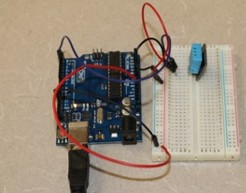
This little pile of parts attached to a computer is not a forgotten project! It’s a tool we built using our own electronics class parts. The little light blue sensor on the board is actually made to test humidity.
This summer, we noticed our 3D printers, including a brand new one, weren’t printing as well as we knew they should. After doing some research, we found that 3D printers HATE humidity. While this is an issue for us, it is also a great learning opportunity because the schools we work with need to know this information as they set up their 3D printers.
First we looked at what humidity levels are in a normal range. In an office (or school/library) environment, humidity should be less than 50 percent. One of our printers measures humidity but only inside the case where it holds the filament. The company that makes the printer specifies this reading should be less than 40 percent. Our office environmental controls don’t measure humidity, so we needed to get an accurate measurement over time.
The solution was in a box for another class we teach that is mostly unrelated to either 3D printing (or HVAC), called Basic Electronics. While taking a long shot look to see if one of our boards had an onboard humidity sensor, we actually found a separate temp/humidity sensor in the box of parts that came with the board. We built a quick circuit, but none of us know C++, so we tried a little vibe coding with Google Gemini (which, it turns out, works great for simple stuff). Once we programmed the board, we dug out an old PC terminal logger (Putty) to record the readings to a file. That data goes into a spreadsheet that we plot to a chart so it’s easier to understand.
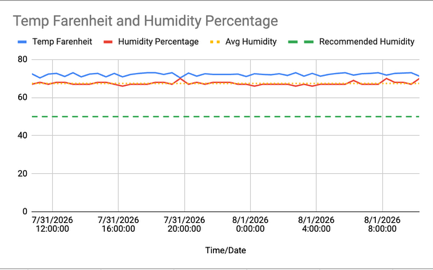
What we found was that the humidity was abnormally high, averaging about 68 percent during our two days of testing (the green dotted line is 50 percent). We measured again in our equipment closet and found it averaged about 63 percent. This data tells us we need to store our printers and filament someplace else to protect them. It’s one of those little things about technology that only experience can teach.